November, December, January, February, March
 Off-season, generally from late Autumn to mid-spring, is an interval ranging from November through March. Unsurprisingly, the off-season is shrinking more and more each year.
Some argue that September and October are off-season, while others consider it shoulder season. But regardless – the crowds are sticking around for longer and visiting more frequently post-pandemic, resulting in a lengthening of peak season and a minimizing of what can be called “off-season.”
Keep in mind that December doesn’t quite reflect these factors because the holiday season is prime time for anniversaries, weddings, Christmas, and New Year's celebrations. With larger crowds and many people on break, this period through January can look more like peak season (in crowds, availability, and pricing).
Pros of Off-Season Travel
Cheaper (for the most part) – Expect to pay less, most of the time. Off-season airfare rates are often hundreds of dollars cheaper. The crowds are sparse, and hotels drop their rates by 20-50%. Food and alcohol costs will stay relatively the same.
Fewer crowds – Fewer people, less traffic, and the ability to get a quick coffee without standing in line for hours! To me, this is probably the biggest perk of off-season European travel. What’s the point of everything being cheaper if you’re being shoved around by tourists, drowning in chaos, and unable to get close to the Mona Lisa in the Louvre (or anything else of importance)?
More availability, less planning ahead – Things aren’t as booked out which means you don’t need to plan ahead as far. In the summer, you typically can’t walk up to popular attractions without a booking, and you may not be able to dine on the weekend nights without a reservation. Conversely, in the off-season, you have a better chance of snagging a ticket or seat to an exclusive spot at a moment's notice.
Quieter and calmer – The overall ambiance is very different in the off-season. It is a slower pace of life, a bit more reserved and content. If you feel claustrophobic in overcrowded areas or can’t handle the up-close and personal smell of Europeans in the hot summertime (with their general lack of deodorant use), then the off-season is right up your alley!
Cons of Off-Season Travel
The cold weather – Disadvantage #1 is the cold and rainy weather. Daily temps typically range from -15°C to 13°C (5°F to 55°F); This is the primary reason that most people do not visit during the chillier months. They don’t want to see Paris in the rain (although it’s quite romantic) or fight against snow, sleet, and hail the whole time.
Higher likelihood of rain – the wet season is October through March and varies based on the country. Higher regions like the Swiss Alps will see more rain in the summertime, but lower regions at sea level will receive more rain in the autumn and winter. Cities like London may rain for half the days of the month.
The days are shorter – The sun will generally set by 5 or 6 p.m. in the peak of winter and sunset can often determine the closing hours of businesses. With limited daylight, shops and cafes will close earlier, leaving you less time to fit in the same amount of activities. Also, if there’s a full-on snow day, you may be held up in your hotel for many hours.
Fewer activity and restaurant options – Another major drawback is that some businesses and tours will be temporarily closed through the off-season. Most beach towns fold up their umbrellas and chairs; this also goes for rooftop bars and charming open-air spots that simply aren’t worth opening in the winter. Keep in mind that there will be fewer English-speaking tours as well since tourism offices have shorter hours and less demand in the winter.
Less small-town tourism – The larger cities like Paris, London, and Rome will still have a reasonable amount of liveliness in the off-season, but smaller towns like Strasbourg, Kotor, and Albarracin will be virtually empty. If you want to sightsee through the lesser-known destinations (without half the town being shut down!), consider the peak or shoulder seasons.
It’s almost too empty – Some areas and smaller villages can feel like ghost towns! While the locals emerge when it’s warm and dry out, you probably won’t see as many residents wandering around in sub-optimal weather conditions. This can feel like a drag if you’re seeking a high-energy vacation.
Pricing can still be high in some areas – In business-oriented cities like Brussels and Dusseldorf, rates may still reflect the high season.
Tips for Off-Season Travel
Visit a Christmas Market – Immerse yourself in the current season! Find a whimsical Christmas market because the holidays are beloved in this part of the world. In fact, Christmas extends to the 26th of December in Europe, known as ‘Boxing Day,’ and New Year's Eve is a larger religious feasting holiday, Saint Sylvester's Day.
Avoid January and February – I find these to be Europe's coldest and rainiest months, but the lower prices also reflect this. Weigh your priorities.
Pack layers and water-resistant materials – The trick to surviving the below-freezing cold is to use thermal base layers and moisture-proof materials. Top off a look with a waterproof raincoat and moisture-wicking socks, scarves, and gloves.
Check business hours & availability – Regarding the aforementioned ghost town, research every event, restaurant, tour, and stop you want to make – because many of them will be closed for business through the low season. You don’t want to make a day trip on a 2-hour train ride or take a bus all the way into town, only to find that your destination is locked down and empty.
Get an early start each day – Since the days are shorter, getting an early start will be key to making the most of your limited time here. Check the number of daylight hours in your preferred locations.
Consider bigger cities for more to do – Smaller villages may leave a lot to be desired in the colder months. Maybe use this as a chance to see the bigger, more exciting cities like Reykjavík, Brussels, and Milan; They will have more to do and see, not leaving you feeling bored in an abandoned or desolate place.
Become one with the cold – You may also want to book Europe’s hottest ski slopes like the Swiss Alps, which are very busy in the winter and give the energy of peak season. I find these colder areas really shine this time of year, so go to Switzerland for skiing, Budapest for hot springs, and Scandinavia for the Northern Lights!
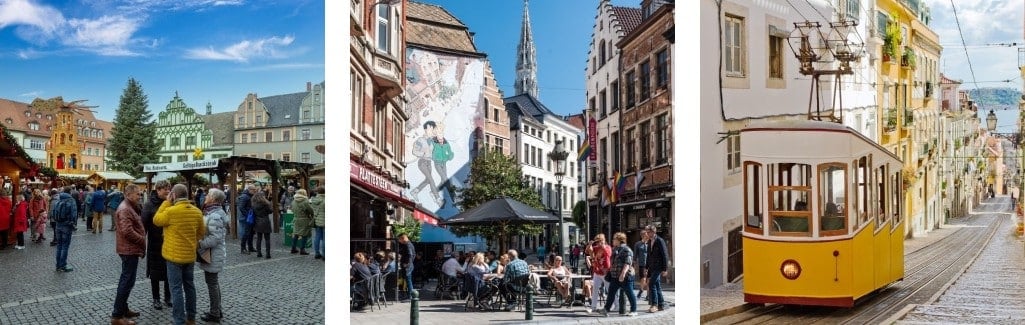




 Peak season or “high-season” in European travel is considered to be the summer months in the Northern Hemisphere – June through August. This coincides with summer break for American families, leading to more family trips and a surplus of tourists.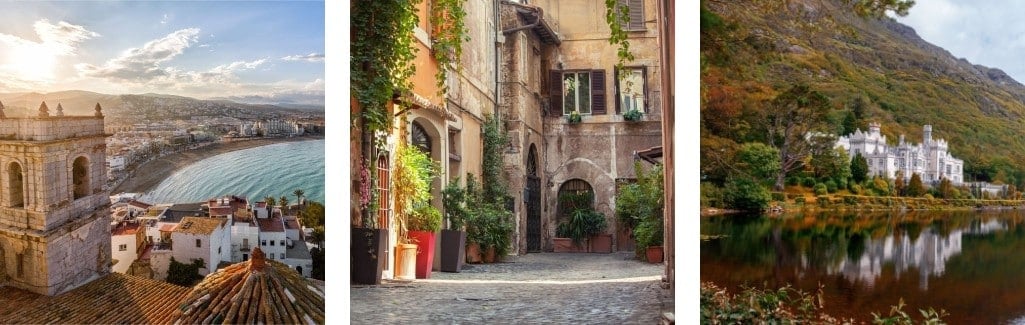
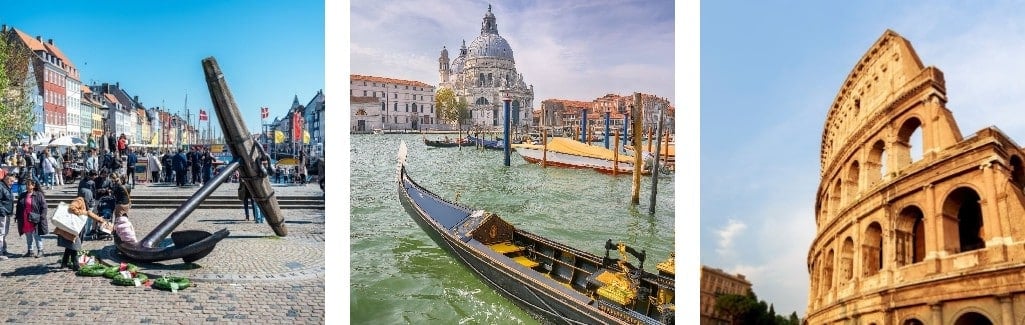
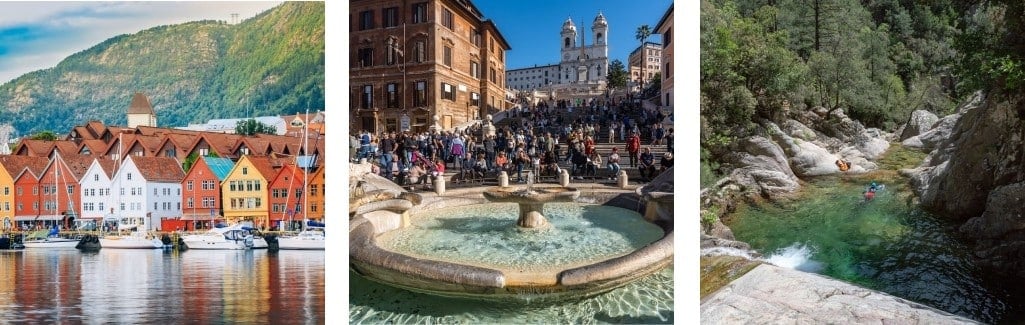
 Some of you may not have heard of a ‘shoulder season,’ but it’s growing in popularity as more people extend their wanderlusting each year. Shoulder season falls in the spring and autumn areas, bringing about cooler temperatures, thinned-out crowds, and lower prices. There’s a plethora of things to do and even the beach towns aren’t overly freezing.